
Luther’s Contemporaries and Political Setting
Book of EstherThis flow shows how the varying actions of political and intellectual figures shape the space in which Luther’s movement can survive.
increasing Bearing strength in each event
 decreasing
Bearing strength in each eventdecreasingFrederick’s Protection

A Prince Shelters the Reformer
Local Protection
Frederick, Elector of Saxony, protects Luther and gives him room to continue his work. The political autonomy of German territories makes that protection consequential.
A Movement Preserved
Carson argues that Luther could not have survived a united and hostile political response. Frederick’s support therefore becomes one of the conditions allowing reforming ideas to take root.
Leo X’s Delay

The Papacy Responds Unevenly
Misjudging the Dispute
Leo X initially treats the disturbance as a conflict among religious orders rather than as a decisive challenge to the Roman system. The response does not immediately silence Luther.
Time for Expansion
Carson regards the delay and vacillation as providentially significant. Luther’s arguments gain ground during a period when a more decisive response might have stopped them.
Charles V’s Divided Attention

The Emperor Faces Competing Pressures
Multiple Political Conflicts
Charles V’s ambitions and conflicts with rival powers demand attention and resources. The essay argues that these demands limit his capacity to suppress the reformers fully.
Unintended Protection
The emperor’s political agenda does not need to support reform in order to create space for it. Carson interprets this diversion as one of the historical conditions that allows the movement to persist.
Erasmus Holds Back

Learning Does Not Ensure Courage
Criticism without Separation
Erasmus criticizes abuses but remains in the Church of Rome. Carson attributes his restraint to timidity, attachment to comfort, and concern for his standing.
Contrast with Luther
The contrast clarifies the particular force of Luther’s character. Scholarship can expose problems, but the essay argues that intellectual criticism alone does not guarantee the resolve needed for a public break.
Princes Shape the Outcome
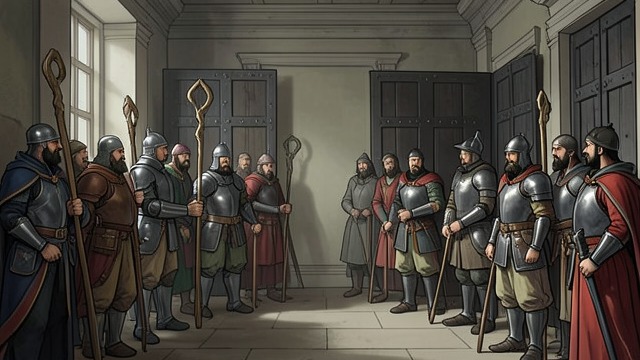
Political Fragmentation Limits Suppression
Independent Territories
The German princes possess powers unavailable to local lords in more centralized kingdoms. Their ability to protect and support reformers makes their political structure unusually consequential.
A Contested Settlement
Some princes help Luther, while imperial power remains a threat. The reform’s fortunes therefore depend on shifting alliances and conflicts rather than on a single ruler’s consistent policy.
When Luther’s controversy begins in Saxony
From Luther’s first protest through the years before 1520
During the early Reformation conflicts
During the first phase of Luther’s challenge
As the Reformation spreads through Germany
